

Park, Rented Hall, or Backyard? Choosing the Right Setting for Your Event
A hospitality-first look at restrooms, shade, kitchen access, and parking across the three most common reunion venues, and what each one means for feeding your guests.


Nobody plans a reunion around the bathroom situation, and I understand why, but I've watched a genuinely lovely afternoon curdle into chaos because there was one bathroom for 90 people and a line that ate 40 minutes of the event. Venue choice gets framed as a vibe decision — park versus hall versus backyard, which one feels right — when it's actually a logistics decision wearing a vibe costume. I care about the vibe too. But I care more about whether Grandma can find a bathroom without a hike and whether the food stays at a safe temperature for four hours.
I'm going to walk through this the way I actually think about it when a family calls me: not venue by venue, but factor by factor, because that's how the problems actually show up on event day.
Restrooms: the thing everyone underestimates
A backyard means you're routing however many guests through however many bathrooms exist inside a private house, and a house built for a family of five was not designed for 60 people to use its plumbing over six hours. I tell people to count actual working toilets, not the number listed on the real estate listing, and to plan on one bathroom per 25-30 guests as a rough ceiling before lines start forming. Past 50-60 people in a backyard, you need a rented portable restroom trailer, and yes, I know how that sounds, but a nice trailer unit runs $200-500 for a day and it's cheaper than the goodwill you lose from a line snaking through someone's kitchen.
Park pavilions and rented halls solve this differently and usually better. Parks typically have public restroom buildings nearby, though the quality and cleanliness varies wildly by park system, so if you can, visit in person rather than trusting a website description. Halls almost always have built-in restrooms sized for their stated occupancy, which is one of the quieter reasons halls handle larger groups more comfortably than the other two options.
Shade and weather protection
This is where backyards and halls trade places. A hall solves weather entirely — it has a roof, it has climate control, and nobody's checking a radar app every twenty minutes. A backyard's shade situation depends entirely on your specific trees and how the sun moves across your specific yard between noon and 6pm, which is a thing almost nobody actually checks before booking a date.
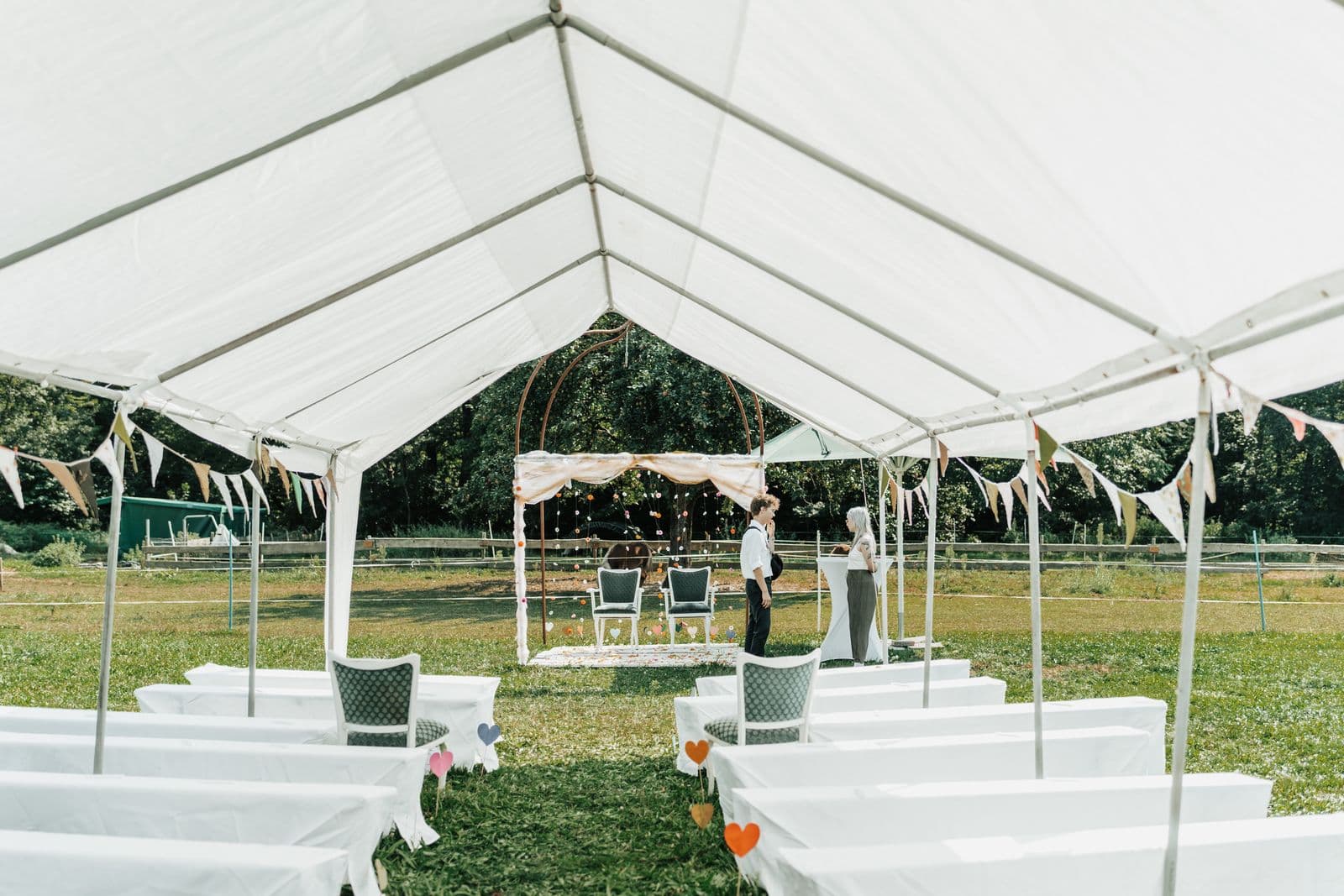
Parks are the wild card. A pavilion with a solid roof handles both sun and light rain fine, but plenty of "park pavilions" are really just a cluster of open picnic tables with no covering at all, and you won't know which one you've booked unless you look at real photos or visit yourself. I always tell families to ask the parks department directly: is there a roof, and is there a backup indoor space if the whole system floods out. If the answer to the second question is no, and your date is outdoors, budget for a tent rental as insurance, not as a maybe.
Kitchen and prep access — this one drives your whole food plan
Here's the factor that gets the least attention and probably should get the most, because it decides what food options are even on the table. A rented hall with a real kitchen — sink, stove, fridge, counter space — means a caterer can do finishing work onsite, hot dishes stay hot, and a potluck can hold food safely for hours instead of sitting out on a folding table under the sun. A backyard has a house kitchen right there, which sounds like an advantage, but a home kitchen wasn't built to plate 80 servings in a 20-minute window, and I've seen hosts trapped inside cooking while their own reunion happens without them 30 feet away.
Parks are usually the hardest on this front. Most pavilions have zero prep space beyond a picnic table, no running water beyond a distant spigot, and no electricity unless you've specifically reserved a powered site. That doesn't rule out a park, but it does rule out anything requiring onsite cooking or careful temperature holding. Coolers, chafing dish setups with sterno, and food trucks with self-contained power all work well at parks precisely because they don't depend on venue infrastructure. If your food plan is potluck or catered drop-off, a park's lack of a kitchen barely matters. If you're hoping to grill onsite or need real refrigeration for a multi-hour event, it matters enormously, and that gap is worth thinking through before the venue is locked in rather than after.
I bring this up because I've had more than one family fall in love with a park's setting, sign the permit, and only then start asking how they're supposed to keep 40 servings of chicken at a safe temperature for three hours with no outlet in sight. Ask the parks department point blank whether the site has power and running water before you get attached to it. It's a five-minute phone call that saves a scramble two weeks before the event.
Parking, and the walk from the car
I once consulted on a reunion at a genuinely beautiful park with a gorgeous pavilion about a quarter mile from the nearest lot, connected by a gravel path. It was fine for the twenty-somethings. It was not fine for three attendees using walkers, and it turned what should have been a joyful arrival into a 25-minute ordeal for people who'd already had a long car ride to get there. Before you book any venue, walk the actual path from parking to seating, and time it. If it's more than a couple minutes for someone moving slowly, you need either a closer accessible spot reserved or a plan to shuttle people in.
Backyards vary by neighborhood — some have generous driveways and street parking, others turn into a genuine traffic jam of double-parked cars blocking neighbors' driveways, which is a fast way to sour relations with people who live next door and had nothing to do with your reunion. Halls, especially VFWs, Elks lodges, and community centers, tend to have dedicated lots sized for their capacity, which is one more quiet reason they handle bigger groups more smoothly. Count on roughly one car per two to three attendees when you're checking lot capacity against your headcount.
Putting it together
None of these three settings is wrong. A backyard under 40 people, with real shade and workable bathrooms, gives you a warmth a rented hall can't match. A park pavilion in the 40-120 range works well as long as you've confirmed roof coverage, power, and a rain backup. A hall handles the widest range comfortably, especially once you're past 80 people or your food plan needs a real kitchen, because it's the one setting that solves restrooms, weather, and prep access all in the same booking.
Whichever way you lean, walk the space in person before you commit, at the same time of day your event will actually happen, so you see the real shade pattern and the real parking situation rather than a website's best-angle photo. A hall photographs a little flatter than a shaded backyard or a scenic park, and if that's the trade you're making for better restrooms and weather protection, matching shirts are one of the easiest ways to give a plain rented room some visual identity — you can browse how other families have handled it in our gallery. And once you've got a venue and a headcount that feels solid, that's a good moment to get a quote on shirts for the group — it's easier to plan the merch once you know whether you're dressing 35 people in a backyard or 150 in a hall.
Ready to bring your event to life?
Tell us what you're planning and we'll put together a custom quote for apparel and merch made just for your group.
Start Your QuoteMore on Venues & Locations
Outdoor vs. Indoor: How to Weather-Proof Your Event
Tent rental realities, negotiating an indoor backup clause into your venue contract, and what actually happens logistically when it rains on your event.
How to Choose the Right Venue for Your Family Reunion
Backyard, park pavilion, rented hall, or hotel? A reunion strategist breaks down real headcount thresholds, costs, and weather backup plans for each.