

Outdoor vs. Indoor: How to Weather-Proof Your Event
Tent rental realities, negotiating an indoor backup clause into your venue contract, and what actually happens logistically when it rains on your event.

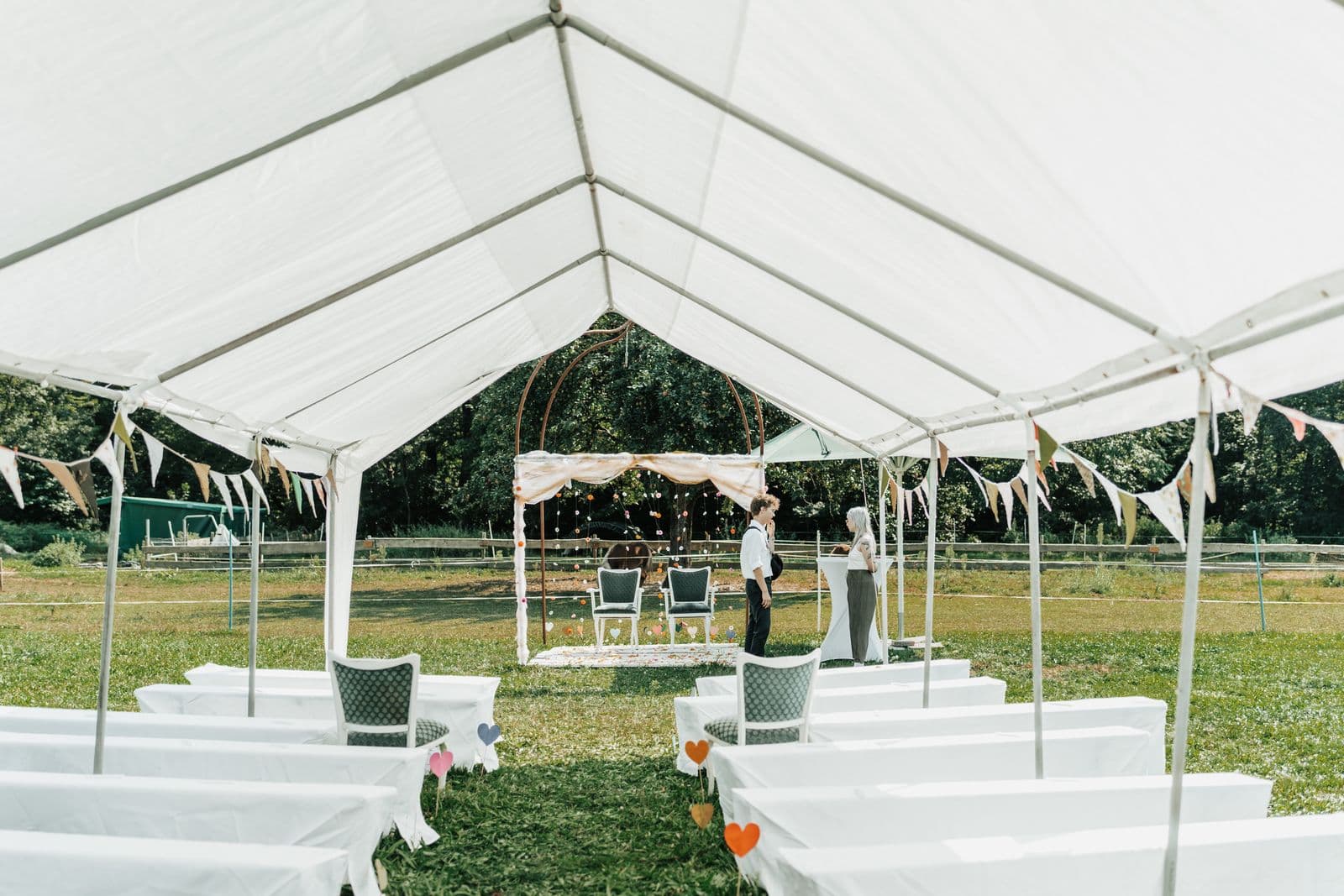
It rained on a reunion I was coordinating logistics for in 2021. Not a drizzle, a genuine downpour that started forty minutes before 90 people were supposed to arrive at a lakeside pavilion with three open sides. We had a tent. The tent had no walls. I spent the first hour of that event on the phone with a rental company begging for sidewall panels while the family's caterer tried to keep chafing dishes from filling with rainwater. That afternoon taught me more about outdoor event planning than any contract I've ever negotiated, and the lesson was simple: your backup plan isn't a real plan until you've priced it, booked it, and confirmed someone can execute it with two hours' notice.
Tents solve less than people think
A tent rental feels like the obvious weather solution, and it is, partially. A basic frame tent for 100 guests runs somewhere between $800 and $2,500 depending on size and region, and that price usually gets you a roof and not much else. Sidewalls, the panels that actually block wind and horizontal rain, are frequently a separate line item, and flooring is almost always extra on top of that. I've seen families budget for "a tent" and then get blindsided by a $600 add-on quote for sidewalls two weeks before the event, right when rental companies are the least flexible on pricing because their inventory's already committed elsewhere.
Wind is the part people underestimate most. A tent without proper staking and weighting can become dangerous in gusts over 30-35 mph, and a lot of rental contracts include a clause that lets the company refuse setup, or require you to take it down, if wind forecasts cross a certain threshold. Read that clause. Ask specifically what wind speed triggers it, and ask what happens to your deposit if the tent gets pulled the morning of. Some companies refund it, some don't, and that's a conversation you want to have while you're signing, not while you're watching a forecast three days out.
Heat is the other tent blind spot. A tent in direct July sun with no sides for airflow can run hotter than the open air around it, not cooler. If you're tenting a summer event, factor in fans or misting equipment as a real budget line, not an afterthought, especially if you've got older guests or small kids who'll feel heat stress faster than everyone else standing around in matching event tees.
Negotiate the indoor backup clause before you sign anything
If your outdoor venue has any indoor space at all, a barn, a clubhouse, a fellowship hall attached to a pavilion, get the right to use it as a weather contingency written into the contract, not agreed to verbally. Verbal agreements evaporate the moment a venue coordinator who isn't the person you originally talked to shows up on event day and says nobody told them about a rain plan.
Specifically ask for: the indoor space guaranteed as backup at no additional fee, or a clearly stated fee if there is one; a defined decision deadline, meaning how many hours before the event you have to commit to moving indoors; and who makes that call, you or the venue. I've dealt with venues that wanted 24-hour notice to activate a backup room, which is close to useless for weather, since a 24-hour forecast is rarely reliable enough to make that call confidently. Push for a same-day decision window, ideally 3-4 hours out, when forecasts are actually trustworthy.
If a venue won't put an indoor backup in writing, that's useful information too. It tells you they either don't have real backup space or aren't willing to commit to it, and you should factor that into whether you rent your own tent as an independent contingency instead of relying on the venue at all.
What actually happens when it rains
Here's the part nobody explains ahead of time: rain doesn't just mean people get wet, it means your timeline collapses. Setup crews that expected dry ground get delayed. Catering staff moving food indoors last-minute need a layout they've never worked in. Guests who'd normally trickle in over 45 minutes all show up at once because nobody wants to stand outside, and now you've got a parking and check-in bottleneck you didn't plan for.
At that 2021 reunion, once we got sidewalls up, the bigger problem became footing. The ground around the pavilion turned to mud within twenty minutes, and half our guests were in sandals. We ended up sending someone to a nearby hardware store for cheap rubber mats just to create a dry path from the parking area to the tent. It wasn't elegant. It worked. The event still happened, people still had a good time, but it happened because someone was actively problem-solving in real time, not because a rain plan on paper magically executed itself.
The families who handle weather disruptions best are the ones who assign a specific person, not "whoever's around," to make the call and execute the pivot. Decide in advance who that is, give them the venue coordinator's direct phone number, and make sure they know the actual terms of your indoor backup clause and your tent contract's wind policy. Everyone else can enjoy the event. That one person's job for the first hour is managing the weather, and it goes a lot better when they're not improvising the whole plan from scratch under a leaking tent corner.
Cold weather gets less attention than it should
Most weather planning conversations focus on rain and heat, but cold-weather contingencies matter just as much for fall and early spring events. Below about 50 degrees with any wind, an outdoor event without heaters becomes a short event, because guests won't stay outside long regardless of how good the food or the company is. Patio heaters run $50-150 a day to rent depending on quantity, and it's a much cheaper insurance policy than losing half your guest list to the parking lot an hour early because everyone's cold.
Layer this into the same conversation as your tent and indoor backup planning, not as a separate afterthought. A venue with an indoor backup for rain often has that same space available as a warm-up option for a cold outdoor event, so ask about both scenarios in the same call instead of treating heat, cold, and rain as three unrelated problems.
I worked a fall reunion where the daytime forecast looked perfectly reasonable, low 60s, and nobody thought twice about heaters. By 7pm it had dropped into the high 30s with a breeze off the water, and half the guests were huddled by the food tables in the only spot blocking wind. We hadn't planned for the temperature swing between afternoon and evening, only the daytime number, which is a mistake I see constantly. If your event runs past sunset any time outside of peak summer, plan the heating around your latest hour outside, not your warmest one.
Checking the forecast without overreacting to it
A ten-day forecast is basically a guess dressed up as data, and I've watched planners cancel or move indoor plans based on a rain icon that showed up eight days out and disappeared by day five. Don't make weather-contingency decisions off anything past a 72-hour window. Inside 72 hours, forecasts get meaningfully more reliable, and that's when your designated decision-maker should actually start watching closely and staying in touch with the venue coordinator. Outside that window, keep planning as normal and resist the urge to pre-panic every family group chat with a screenshot of a ten-day outlook that's going to change four more times before it matters.
Building the actual contingency budget
Whatever your outdoor event's core budget is, I tell people to set aside 8-12% specifically for weather contingencies, tent upgrades, heater or fan rental, an indoor backup fee if one applies. It's money you might not spend. It's also the difference between a smooth pivot and a scramble when the forecast turns two days out. Browse our gallery for examples of both outdoor and indoor reunion setups if you want a sense of how different venues and weather plans actually look in practice, and once you've got your venue and contingency plan locked, get a quote for apparel that'll hold up whether your event ends up under a tent, in a hall, or, if you're lucky, under nothing but clear sky.
Ready to bring your event to life?
Tell us what you're planning and we'll put together a custom quote for apparel and merch made just for your group.
Start Your QuoteMore on Venues & Locations

Park, Rented Hall, or Backyard? Choosing the Right Setting for Your Event
A hospitality-first look at restrooms, shade, kitchen access, and parking across the three most common reunion venues, and what each one means for feeding your guests.

How to Choose the Right Venue for Your Family Reunion
Backyard, park pavilion, rented hall, or hotel? A reunion strategist breaks down real headcount thresholds, costs, and weather backup plans for each.