

Wedding Welcome Bags and Swag Your Guests Will Actually Use
Most welcome bag items end up in the hotel trash can by checkout. Here's what actually gets kept, from local-flavor treats to drinkware guests take home for years.

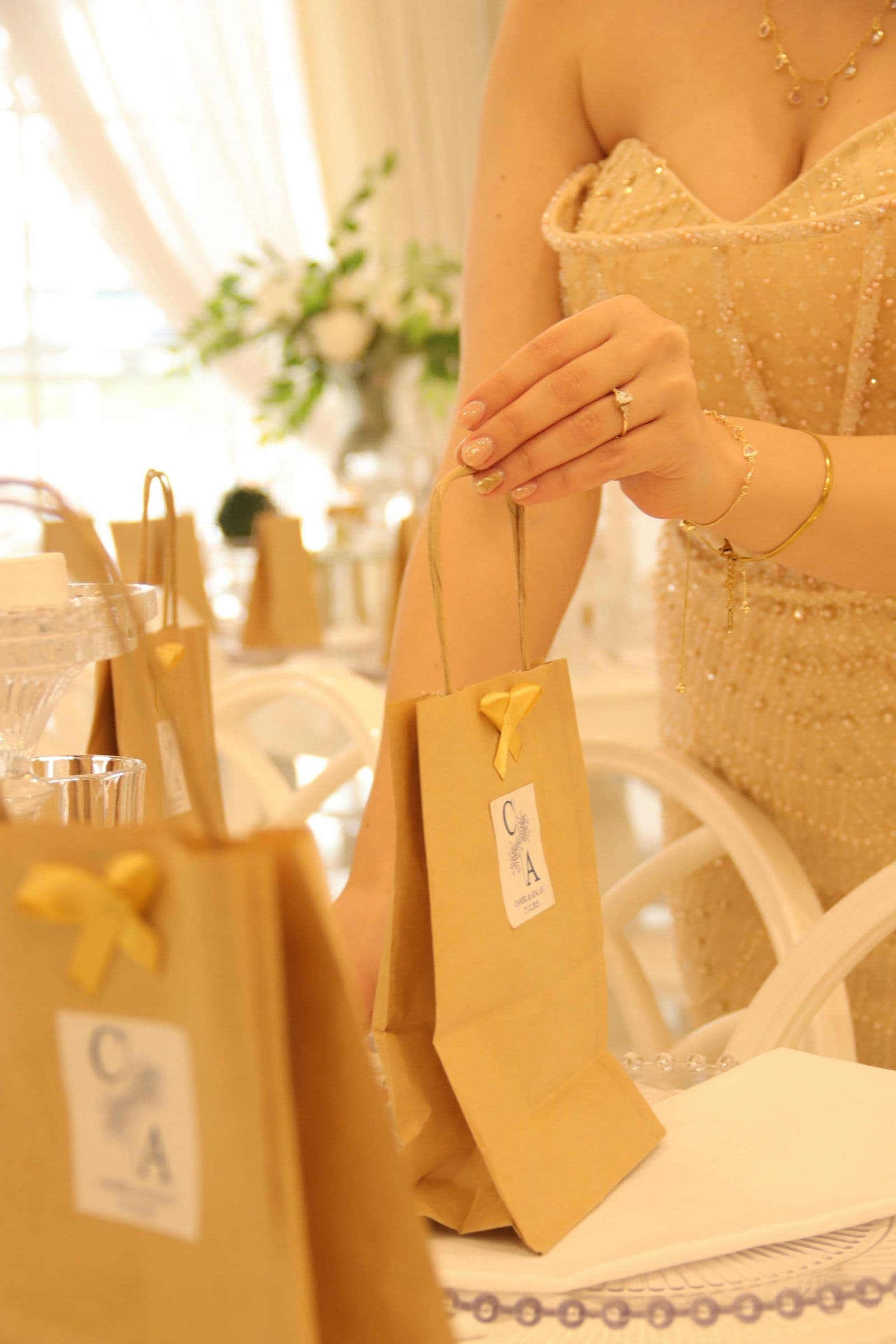
I once watched a hotel housekeeper empty out a welcome bag left behind in a checked-out room, and it told me everything I needed to know about what works and what doesn't. Into the trash went a branded keychain, a folded paper map nobody unfolded, and a mini bottle of water that had gone warm three days earlier. Still sitting on the dresser, coming home with the guest instead, was the tumbler. That's the whole lesson, really. If you want to know whether a welcome bag item is worth the money, ask yourself whether it survives checkout.
I styled a wedding a few years back for a couple getting married in the same small Georgia town where the bride grew up, and her mother wanted a welcome bag for the sixty-some out-of-town guests that felt like "a hug when you walk in the door," her words. We didn't have a huge budget, so we had to be ruthless about what earned a spot in that bag. Local pecans from a shop two blocks from the venue, a handwritten note from the couple, a printed weekend itinerary that guests actually needed, and a set of glass tumblers etched with the wedding date that doubled as the welcome drink glass and the take-home gift. Nothing filler. People still mention those tumblers to the bride, and that wedding was four years ago.
The stuff that ends up in the hotel trash can
Every wedding planner has a mental list of welcome-bag items that look great on a Pinterest board and mean nothing to a real guest. Branded pens that write for about eleven strokes before drying out. Trail mix nobody wanted after the free hotel breakfast. Printed maps when every guest has GPS in their pocket. A koozie in a color that doesn't match anything the guest owns. These items aren't bad ideas exactly, they're just generic, and generic is what gets left behind. A welcome bag is a first impression of the whole weekend, and a first impression built on filler tells your guests the whole thing is filler too.
The instinct to fill space is understandable. A bag that's mostly empty feels stingy, so people cram in extra items to make it look substantial. But volume isn't the same as value. I'd rather hand a guest four things they'll actually use than nine things they'll sort through in the hotel lobby trash can before they even get to their room.
What actually survives the trip home
Local flavor beats generic swag almost every time, and it doesn't have to be expensive. A few local honey jars, a shortbread cookie from the bakery down the street, a bottle of hot sauce if you're somewhere with a food identity worth bragging about. These items say "we're glad you traveled here specifically" instead of "we bought a bulk pack of something." Guests remember the specificity. Nobody remembers a granola bar.
Practical inclusions matter more than people give them credit for. Advil, a couple of bandaids, hand sanitizer, a bottled water that's actually cold when they check in, sunscreen if the ceremony's outdoors in July. These are boring to plan and they get used every single time, usually within the first two hours of arrival. I always tell couples: your welcome bag doesn't need to be Instagram-famous, it needs to solve a problem a tired traveler actually has.
Then there's the centerpiece item, the thing that makes the bag feel like a gift instead of a survival kit. This is where I push couples toward apparel and drinkware over anything printed with a logo and forgotten. A genuinely nice tumbler or a set of etched glasses does double duty as the welcome drink vessel at check-in and then rides home in someone's suitcase to get used at their own kitchen table for years. We work with couples a lot on custom glassware and drinkware for exactly this reason. It's the rare welcome-bag item that keeps earning its keep long after the wedding weekend ends, and it photographs well stacked in the bag too, which matters if you're hoping guests post about the weekend.
Skip the pen, unless it's a genuinely good one
I'll say something a little controversial for someone whose job involves choosing swag: most branded pens are a waste of the bag's real estate. A cheap plastic pen with a hotel-conference-giveaway feel does nothing for your event and gets left on a nightstand. But that doesn't mean pens are off the table entirely. A weighty, well-made custom pen with the couple's names and date, the kind that actually feels good in your hand when you write with it, ends up living in someone's junk drawer or work bag for years, quietly doing its job every time they sign something. The difference between a pen guests keep and a pen guests toss almost always comes down to how it feels, not how much it costs to print on it. Spend the extra dollar or two per unit here if you're going to include one at all.
Building the bag without overspending
You don't need to hit every category for every guest. If your budget is tight, I'd rank priorities like this: something practical first, because it gets used within hours of arrival. A local-flavor item second, because it sets the tone for the weekend. One keepsake-quality item third, the thing that survives the trip home. Skip everything else. A welcome bag with four well-chosen items beats one with nine mediocre ones, every time, and it costs less to boot.
Bag size and presentation matter more than people expect too. A flimsy plastic bag undersells even good contents, while a simple kraft paper bag with a ribbon or a printed tag makes a modest bag feel intentional. I've seen couples spend real money on contents and then hand them out in a bag that looks like an afterthought. Presentation is cheap. Don't skip it.
Coordinating it with the rest of the weekend
The best welcome bags I've styled don't feel like a separate errand from the rest of the wedding, they feel like the first chapter of it. If your colors are sage green and cream, the ribbon on the bag should match, and if you're doing any kind of matching element for a rehearsal dinner or a group event later in the weekend, that's worth planning alongside the welcome bag rather than as a separate decision made under deadline pressure two weeks out. A lot of the couples and reunion families we work with end up ordering both together, drinkware for the welcome bags and apparel for a group activity, because it's one cohesive design decision instead of two disconnected ones.
If you're planning a wedding weekend, a milestone reunion, or really any multi-day gathering where out-of-town guests need a reason to feel welcomed the second they walk in, start with what a guest will actually carry home, not what looks good in a flat-lay photo. Figure out your headcount and your rough budget per bag, and request a quote for the drinkware or apparel pieces you want to anchor it. We can usually work within a range that still leaves room for the local honey and the good pens too.
Ready to bring your event to life?
Tell us what you're planning and we'll put together a custom quote for apparel and merch made just for your group.
Start Your QuoteMore on Décor & Keepsakes

Photo Ops That Wow: Setting Up a Backdrop and Photo Booth for Your Event
DIY backdrop ideas across three budget tiers, props worth including versus skipping, and why matching apparel is what actually makes a group photo pop.

Why Matching T-Shirts and Custom Swag Bring Reunions Together
Matching apparel does more than look good in photos. It helps a crowd find its own people, becomes a keepsake that outlasts the event, and makes the group photo worth framing.
Choosing a Reunion Theme (and Carrying It Through Décor and Apparel)
A good theme is a feeling and a palette, not a costume idea. Here's how to pick one that feels intentional and carry it from invitations through the event shirts.