

Team-Building Activities That Don't Feel Like Team Building
Trust falls and forced vulnerability circles make people perform enthusiasm they don't feel. Here's how to pick corporate retreat activities with an actual point.

I once watched a room of forty engineers get handed a stack of marshmallows and dry spaghetti and told to build the tallest freestanding tower in fifteen minutes, "for team building." Half of them treated it as an engineering puzzle and got genuinely into it. The other half stood there holding a marshmallow, visibly doing math about how much of their actual workday this was eating. Same activity, same instructions, completely different reaction — and the facilitator never noticed the split, because she was reading her own excitement about the activity instead of reading the room.
That's the core problem with most corporate team-building. It's picked because it photographs well or because a vendor sold it as "high engagement," not because anyone asked what this specific group of people actually needs. A sales team that's competitive by nature will eat up a bracket-style challenge. A team of engineers who spend all day heads-down might get more out of something with a real problem to solve than a game with a winner. Treating both groups the same is how you end up with half a room quietly checked out and calling it a successful offsite because nobody complained out loud.
The tell that an activity is going to flop
Forced fun has a specific signature: it asks people to perform enthusiasm they don't feel, in front of coworkers whose opinion of them matters for their actual job. Trust falls are the classic example, but the more common modern version is the icebreaker that demands a personal vulnerability share — "tell the group about a time you failed" — from people who barely know each other and have to sit in a meeting with each other on Monday. Nobody wants to be emotionally exposed in front of someone who'll be reviewing their performance review next quarter. That's not a bonding exercise, it's a liability for the person being asked to share.
The fix isn't dropping team building altogether. It's picking activities that give people a real task to focus on, where connection happens as a byproduct of doing something together instead of being the explicit, stated goal of the exercise. People bond faster when they're not being watched bonding.
Activities with an actual point
A real problem the team already has, turned into a workshop. This is the single most underused option, and it's free. Instead of an abstract trust exercise, take an actual low-stakes internal problem — how the team handles handoffs between shifts, what's broken about the current meeting cadence, how a new hire's first week could go better — and spend ninety minutes working through it together in small groups, then present solutions back. People get invested because it's real, it produces something the team can actually use afterward, and the collaboration happens naturally because they're solving a shared problem instead of performing a scripted bonding ritual.
A cooking or assembly challenge with a genuine constraint. I've run a version of this with corporate groups where teams get a fixed budget and have to plan a meal, or get a kit and have to assemble something functional, against a clock. It works because there's a real output at the end — food you eat, or a thing that either works or doesn't — and the pressure of the constraint gets people talking strategy instead of small talk. The bonding is incidental. Nobody's asked to share their feelings; they're asked to figure out if they have enough time to caramelize onions.
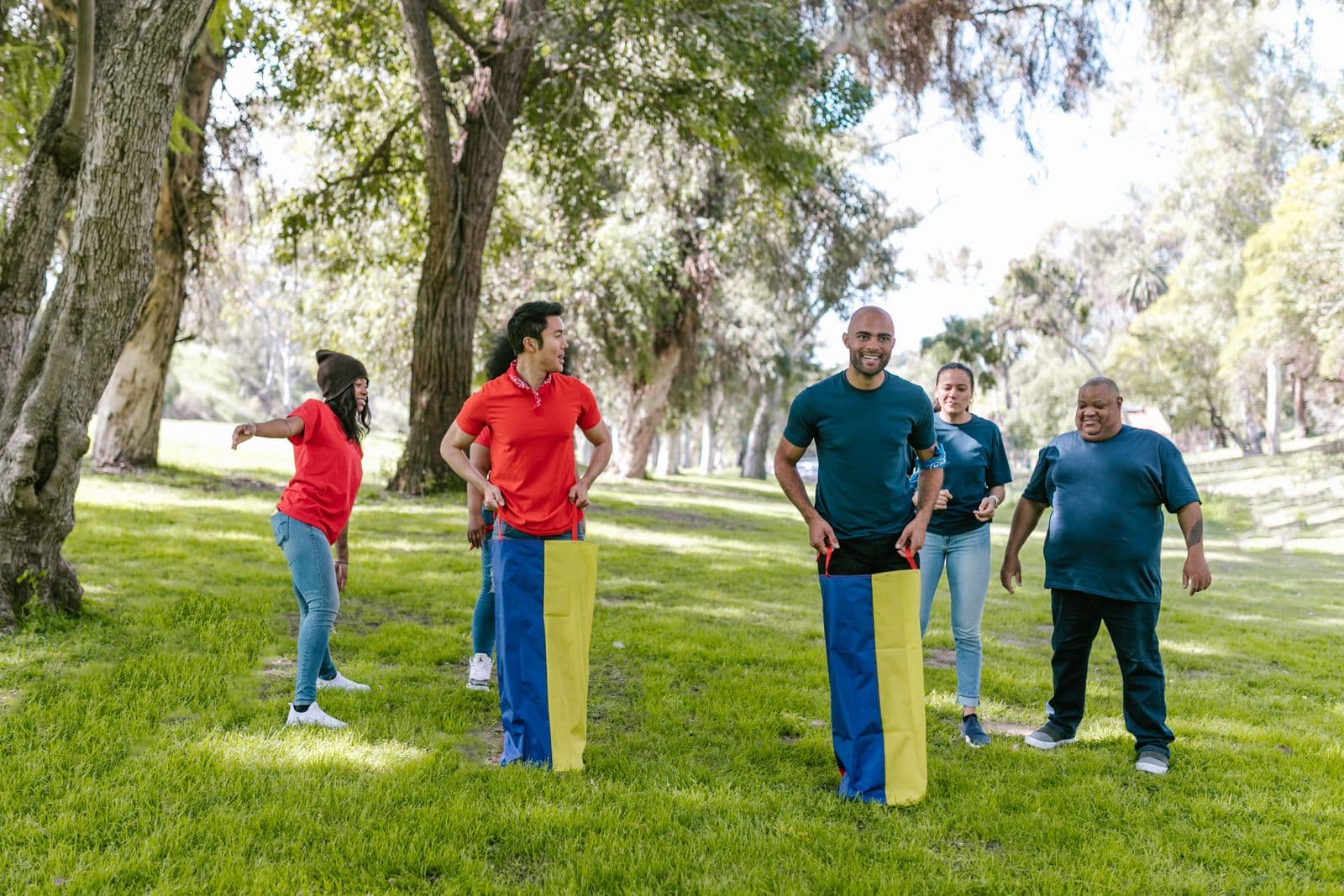
An outdoor activity that's genuinely physical but not competitive against each other. Group hikes, a volunteer day doing physical work for a local nonprofit, a low-ropes course run by an actual facilitator who knows what they're doing — these work because the "opponent" is the terrain or the task, not a coworker, which takes the awkward competitive-in-front-of-your-boss dynamic off the table entirely. I ran a team retreat two summers back where instead of the planned trivia night, we spent an afternoon doing trail maintenance with a local parks group. Nobody expected it to be the thing people talked about afterward, but it was — there's something about doing manual, slightly uncomfortable physical work alongside someone that builds a different kind of familiarity than a game night does, and it didn't ask anyone to perform anything.
Read the room before you commit to a format
Before picking anything, ask a few honest questions about the specific group. Is this a team that already gets along and just wants an enjoyable day, or a team with real friction that a game isn't going to paper over? Is it a group of naturally competitive people who'll enjoy a bracket format, or a quieter team that'll find a loud competitive format exhausting? Is this the first time this group has met in person, in which case low-pressure and structured beats loose and improvised, or a team that's worked together for years and would rather have unstructured time than another scripted activity?
The size of the group matters too. A group of 12 can do something conversational and flexible, adjusting on the fly based on energy in the room. A group of 60 needs more structure going in, because you can't read the room and adjust in real time the way you can with a dozen people — you need a format that works whether the room's energy is high or low, since you won't have time to pivot mid-activity.
The unglamorous stuff that actually matters
A retreat that runs from 8am to 6pm with one fifteen-minute break in the middle will wear people out regardless of how good the activities are. Build in real downtime, real food that isn't an afterthought, and don't schedule the "big bonding activity" as the very first thing in the morning before people have had coffee or the very last thing after a long day when everyone's running on fumes.
Weather-dependent outdoor activities need an actual backup plan, not a hopeful one — I've seen a planned kayaking trip get scrapped for storms with zero backup, and the group just sat in a hotel conference room for three hours instead, which was worse than if there'd been no outdoor activity planned at all.
One thing that helps more than people expect, especially for a multi-day retreat or one that mixes indoor and outdoor sessions: giving the team something comfortable and unified to wear that isn't a stiff polo nobody would choose for themselves. A set of team hoodies or sweatshirts does more for the "we're actually a team today" feeling than a scripted icebreaker ever will, and it holds up for the early morning hike and the evening around a fire pit alike, when the temperature's dropped and everyone's still in the same clothes from that morning.
If you're planning a retreat and want to think through what fits your specific group instead of defaulting to whatever the last vendor pitched, request a quote and we can talk through options alongside the apparel side of it. The activity matters more than the shirt, obviously. But get both right and people leave actually talking about the retreat instead of just relieved it's over.
Asking for feedback without turning it into another exercise
One habit worth building into any retreat, regardless of which activities you land on: ask people afterward what actually worked, and ask it in a low-pressure way, not a formal survey with ten questions and a five-point scale nobody fills out honestly. A quick, anonymous "one thing that was worth your time, one thing that wasn't" note works better than a structured evaluation form, because people are more candid when the ask itself feels casual instead of like a performance review of the retreat's own performance.
I've been surprised more than once by which activities actually land. The marshmallow tower crowd I mentioned earlier ranked the least favorite activity as the "official" trust-building session and the most favorite as an unstructured hour where people just sat around a fire pit with no agenda at all. That's data worth having before you plan the next one, and it's a lot cheaper to gather than another vendor pitch deck full of activities that sound good on paper.
Ready to bring your event to life?
Tell us what you're planning and we'll put together a custom quote for apparel and merch made just for your group.
Start Your QuoteMore on Activities & Entertainment
15 Reunion Activities That Actually Get Every Generation Involved
Most reunion game lists are built for one age group and quietly fail everyone else. Here's how to structure activities that work for toddlers, teens, and grandparents alike.

Icebreakers and Games That Get Every Generation Talking
Reunion icebreakers have a harder job than party games at a wedding: reconnecting people who used to be close. Here's how to pick and size the right one.