

How to Plan a Multi-Day Family Reunion Weekend Itinerary
A real sample Friday-to-Sunday reunion schedule, built around pacing meals and downtime so guests don't burn out before the weekend's over.

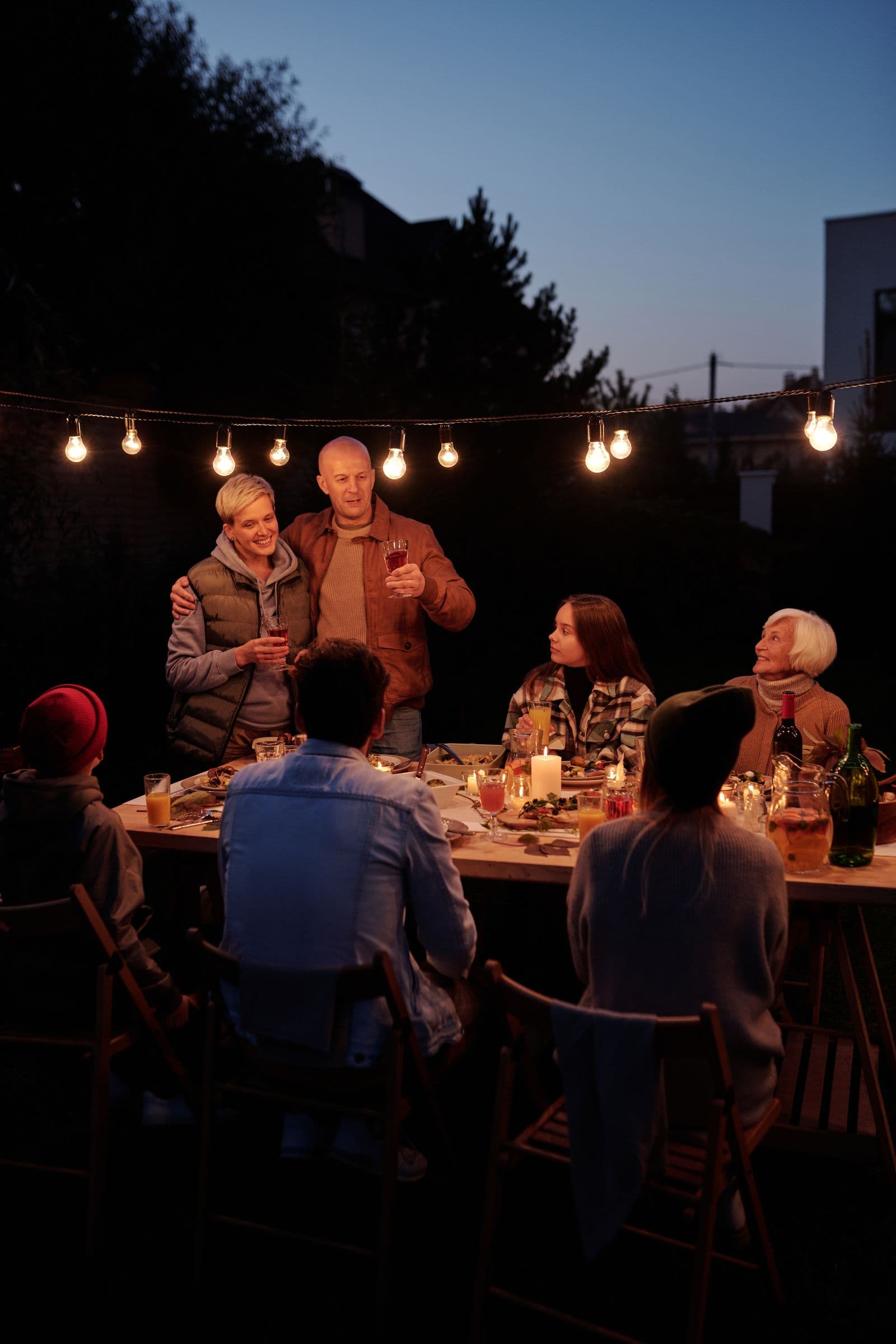
The most common mistake I see with multi-day reunions isn't the food or the venue. It's pacing. Families plan a weekend like it's a wedding — every hour scheduled, every meal a production — and by Saturday night half the attendees are hiding in their hotel rooms because there's been no actual downtime since Friday afternoon. A good reunion weekend has rhythm to it: a big moment, then room to breathe, then another big moment. I've catered enough of these to know that the schedule matters just as much as the menu.
Below is a real sample structure I've used as a starting template with families, built around a Friday-Saturday-Sunday weekend. Adjust the specific activities to your family, but the shape — light Friday, big Saturday, easy Sunday — holds up across almost every group I've worked with, whether it's 30 people or 200.
Friday evening: welcome dinner, kept deliberately low-key
Don't make Friday the big event. People are arriving on different schedules, some driving in from six hours away, some flying and dealing with rental cars, and a formal seated dinner at 6pm assumes everyone lands the same way. I recommend a casual welcome dinner from 6-8:30pm with a flexible arrival window rather than a hard start time — think taco bar or a simple buffet that holds well over two hours, not a plated meal that goes cold waiting for stragglers.
Keep the program light. A brief welcome from whoever's hosting, maybe five minutes, no more. This is not the night for the slideshow or the big speeches — save those for Saturday when everyone's actually arrived and settled. I've seen families try to cram a full "meet everyone" icebreaker into Friday night and it falls flat, because a third of the room is still checking into their hotel at 7:45. Let Friday be arrival energy: casual food, name tags if it's a big family with new spouses and kids nobody's met yet, and an early-ish wind-down. Nobody should still be "on" past 9:30 or 10.
Saturday: this is the day, so build in real breaks
Saturday is your anchor day, and it's also where pacing problems show up the most, because families tend to overstuff it. Here's roughly how I structure it when I'm consulting on the food and flow:
8:30-10am — breakfast, casual, self-serve. Coffee, pastries, fruit, maybe a hot item like breakfast casserole that can sit in a chafing dish. Don't schedule anything mandatory here. Let people wake up on their own clock; some will be up at 6:30, some at 10.
10am-12:30pm — the main activity block. This is your group photo, your organized games, your cousin reunion softball game, whatever your family's version of "the thing everyone does together" is. Two and a half hours is enough for a real activity without exhausting people, especially older relatives who won't say they're tired but absolutely are by hour three.
12:30-2pm — lunch, and a real break, not a rushed one. This is the meal I see families rush the most, and it's the one that most needs slack. People want to sit, actually eat, and talk to family they haven't seen in a year. Budget a full 90 minutes minimum, longer if you can.
2-4:30pm — unstructured time. This is the block families most often cut, and it's the one I fight hardest to keep. Pool time, card games, naps, little kids running around, whoever wants to keep talking at the lunch table. Not everything needs a plan. This gap is what keeps Saturday from turning into a forced march, and it's usually where the best unplanned conversations happen anyway.
5-6pm — downtime to get ready. Especially if Saturday night is a dressier dinner or has a program (awards, toasts, slideshow), give people an hour to shower, change, and regroup before the main event.
6-9pm — the big Saturday dinner. This is where the real program goes: the toasts, the memory slideshow, the family awards if your group does that sort of thing, matching shirts on for the group photo. Budget for a full-service or catered meal here if your budget allows it, since this is the meal people will remember and photograph. For 100 people, plan on roughly $15-25 per head for a solid buffet dinner with two mains and real sides, more if you're doing plated service.
Sunday: farewell brunch, and let people leave when they need to
Sunday should never look like Saturday. People are tired, some are already thinking about the drive home, and trying to run another full day is how you end up with a sparse, deflated final morning. A farewell brunch from 9-11:30am, with a flexible end time rather than a hard cutoff, respects that different families are on different departure schedules. Coffee, a simple hot breakfast spread, maybe a make-your-own waffle or omelet station if your budget and venue allow it — nothing that requires precision timing.
Keep the goodbye simple: a short closing thanks, maybe a final group photo if you didn't get a clean one Saturday, and let people drift out as their schedules require. Don't schedule a mandatory activity that keeps everyone pinned in place until noon. The families who handle Sunday best treat it as an open house window, not a scheduled event block.
Why the gaps matter more than the activities
Every time I've consulted on a reunion that felt exhausting rather than joyful in hindsight, the root cause was the same: no unscheduled time. Families pack the weekend because they're excited and don't want to waste a single hour they've got everyone together, which I understand completely. But a weekend with zero slack doesn't feel abundant, it feels like a forced march, and by Sunday morning people are running on fumes instead of enjoying the last few hours together.
Build in at least one real two-hour gap per full day with nothing scheduled. It feels like you're wasting planning effort when you're building the itinerary, and it's the single thing families thank me for most after the fact.
I worked a reunion a few years back where the planning committee, all first-timers, built a Saturday schedule with something happening literally every 45 minutes from 8am to 9pm: breakfast, a scavenger hunt, a group hike, lunch, lawn games, a craft table, dinner, a talent show. It read great on paper. By 4pm, half the older relatives had quietly disappeared to their cars to sit in air conditioning, and two of the teenagers were asleep on a picnic bench. Nobody had done anything wrong exactly, they'd just never given anyone room to opt out or recharge. We cut the craft table and the lawn games from the following year's version and replaced them with nothing. Just open time. The feedback afterward was that it felt like a completely different, far more relaxed weekend, even though we'd removed activities rather than added them.
The same logic applies to meals themselves, not just the blocks between them. Don't stack two heavy, formal meals back to back on the same day. If Saturday dinner is the big production, keep Saturday breakfast and Sunday brunch genuinely casual and self-serve, both in the food and in the expected dress and behavior. Giving people's stomachs and their social energy a lighter meal to recover on matters more than it sounds like it should.
What this actually takes to pull off
A three-day weekend like this, food alone, typically runs $4,000-12,000+ for a group of 100 depending on how many meals you're catering versus doing casual/self-serve, plus lodging costs if people aren't local. It's a bigger commitment than a single-day reunion, financially and logistically, which is exactly why the pacing matters so much — you're asking people to give you a whole weekend, and a weekend that runs them ragged isn't a gift, even with the best intentions behind it.
If you're building out a weekend like this, it's worth deciding early whether you want matching shirts for the Saturday main event specifically or for the whole weekend — a lot of families order one design for Saturday's photos and let Friday and Sunday be more casual. Browse our full product range to see what fits your budget and style, from tees to hoodies for cooler evening sessions, and once you've got a rough headcount and a schedule that isn't trying to do too much, request a quote and we'll get you real pricing to work with.
Ready to bring your event to life?
Tell us what you're planning and we'll put together a custom quote for apparel and merch made just for your group.
Start Your QuoteMore on Planning & Logistics

How Far in Advance Should You Start Planning a Family Reunion?
A real month-by-month reunion timeline, from locking the venue at 12 months out to the week-of checklist, plus the last-minute mistakes that cost families the most.
How to Get RSVPs (and Real Attendance) for a Family Reunion
A plain evite has no deadline pressure, so people ignore it. Here's how to get real headcounts by tying RSVPs to something concrete, like a shirt order.
What a Family Reunion Really Costs (and How to Budget for One)
Real cost breakdowns for small, medium, and large family reunions across venue, food, lodging, and apparel, plus where families overspend without noticing.