
Catering to Dietary Restrictions and Allergies Without Losing the Fun
A practical system for collecting dietary info ahead of time, labeling food clearly, working with caterers on substitutions, and handling severe allergies safely.

"Just let us know if you have any allergies" is the single most useless sentence in event planning. I say that as someone who's watched it fail in real time, standing next to a buffet table while a guest quietly decided not to eat anything rather than interrupt the line to ask what's in the pasta salad. People don't raise their hand. They don't want to be the difficult one, especially at a family event where they're already navigating enough dynamics without adding "special dietary needs" to the list. If you actually want to feed everyone safely, you need a system, not a sentence on the invitation.
I've built this system for events from 25-person anniversary dinners to 300-person reunion banquets, and it breaks into four parts: collecting the information properly, labeling food clearly, working with your caterer on real substitutions, and handling severe allergies with the seriousness they deserve.
Collect information with a form, not a vague ask
Vague asks get vague responses, or no response at all. What works is a specific, short form sent with the RSVP, with actual checkboxes rather than an open "any allergies?" text field. I recommend something close to this structure:
- Do you have any food allergies? (list them specifically — "tree nuts," not just "allergies")
- Is any allergy severe enough to require an EpiPen or emergency response?
- Do you follow a dietary restriction? (vegetarian, vegan, gluten-free, dairy-free, kosher, halal, other)
- Any other restriction we should know about?
The severity question matters more than people realize. A mild lactose sensitivity and a life-threatening tree nut allergy get treated completely differently in my kitchen planning, and lumping them into one generic "dietary restrictions" bucket is how severe cases get missed. I ask every family I work with to separate "please accommodate if reasonably possible" from "this is a safety issue, full stop."
Set a real deadline for the form, tied to your RSVP deadline, and follow up personally with anyone who hasn't responded a week before that deadline closes. I've found a short personal text — "hey, did you get the food form, want to make sure we've got you covered" — gets a response ten times more reliably than a group email reminder ever does. People respond to a direct question from a person a lot better than to a form floating in their inbox.
Once you have the list, build a real headcount by category
Don't just collect the information and hope your caterer figures it out. Translate it into hard numbers before your final catering conversation: "8 gluten-free, 5 vegetarian, 2 vegan, 3 nut allergies, 1 severe with EpiPen." That specificity changes what a caterer can actually plan for. A caterer told "a few people have allergies" will make a guess. A caterer told exact numbers and specific allergens can build a real plan, price it accurately, and flag anything genuinely difficult to accommodate before it becomes a Saturday-morning scramble.
For a 100-person event, I typically see something like 10-15% requesting a vegetarian option, 5-8% gluten-free, and true severe allergies affecting maybe 2-4% of guests, though this varies a lot by family and region, so use your actual collected numbers over any generic percentage.
Label food clearly, and put the labels where people actually look
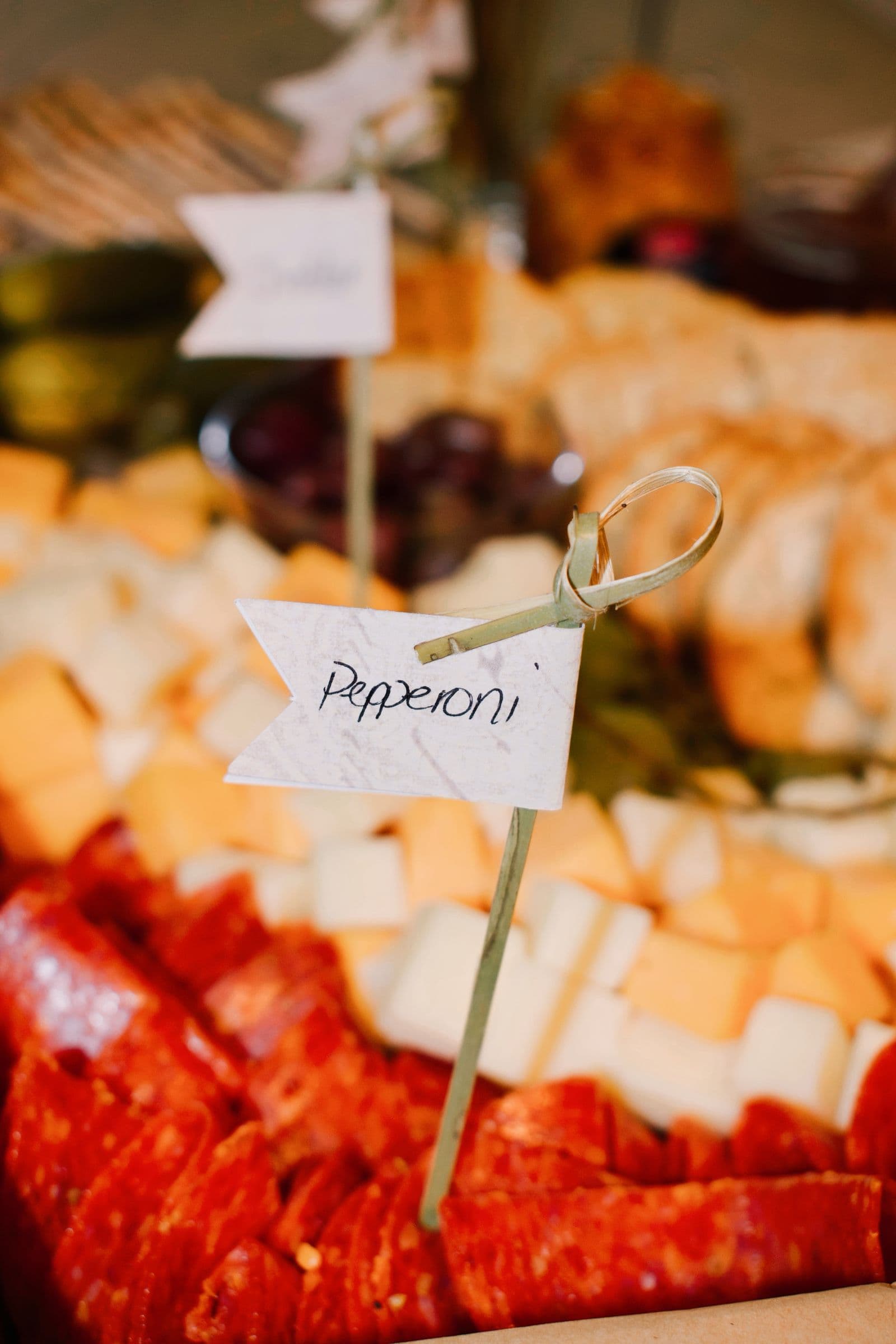
At the table, every dish needs a small card naming it and flagging its major allergens: contains nuts, contains dairy, gluten-free, vegan. Handwritten cards on cardstock work fine; you don't need anything fancy, you need clarity. Put the label directly in front of the dish, not taped to the wall behind the table where nobody's looking while they're juggling a plate.
For anything genuinely allergen-free that's meant to be safe for someone with a severe allergy, I go a step further: a distinct label color or a small icon, and I tell whoever's hosting to mention it out loud during any welcome announcement. "The dishes with the green cards are nut-free" takes ten seconds to say and saves someone from having to interrogate a buffet table in front of relatives they haven't seen in years. I catered a reunion where a teenager with a severe peanut allergy told her mom afterward that it was the first family event where she didn't have to ask anyone anything. That's the whole goal, honestly. Nobody should have to advertise their medical condition to eat lunch.
Working with your caterer on substitutions
Bring your categorized list to the caterer early, not the week of the event. Most caterers can build one strong vegetarian main and adapt existing sides to be gluten-free or dairy-free without much added cost, but they need lead time to source ingredients and plan prep, especially for a dedicated vegan option, which usually can't just be "the vegetarian dish minus cheese" if it's going to actually taste good. Ask specifically whether they have a certified gluten-free prep process or just a gluten-free recipe cooked in a shared kitchen, because those are very different levels of safety for someone who's actually sensitive rather than just avoiding gluten by preference.
If you're doing a potluck instead of professional catering, this gets harder, and I won't pretend otherwise. Assign your dietary-restriction guests' dishes to people you trust to follow a recipe carefully, and ask that anyone bringing a dish list its ingredients on an index card next to it. It's not foolproof, but it's dramatically better than an unlabeled potluck table where a well-meaning cousin's "surprise casserole" turns out to have walnuts in it.
Severe allergies need actual safety protocols, not just labels
For anyone with a severe, EpiPen-level allergy, treat it as a safety issue, not a preference. That means separate serving utensils for allergen-free dishes so a spoon that touched the peanut sauce never touches the nut-free option. It means asking your caterer directly about cross-contact in their kitchen, not just their ingredient list — a dish can be nut-free in its recipe and still get contaminated if it's prepped on the same cutting board as something that isn't. And it means knowing, as the host, exactly where that guest's EpiPen is and confirming someone nearby knows how to use one, before food service starts, not after something happens.
If you have a guest with a documented severe allergy, it's worth a direct phone or video conversation, not just the form, so you can ask specific questions about their triggers and they can ask about your plan. That conversation takes fifteen minutes and it's the difference between a guest who feels genuinely safe and one who's quietly anxious through the entire meal, watching every dish before they'll touch it.
None of this needs to feel clinical or turn your reunion into a medical event. A clearly labeled table, a caterer who was given real numbers with real lead time, and a host who knows where the EpiPen is, all of that fades into the background of a normal, happy gathering. The guests who benefit from it are usually the only ones who notice it happened at all, and what they notice is that they got to just eat, talk, and enjoy their family like everybody else, instead of quietly managing their own risk in a room full of unlabeled casseroles.
If you're not sure how to structure this for your specific event, especially anything over 75 people or with a documented severe allergy in the group, it's worth a direct conversation before you finalize your catering plan. You can reach out to us and we're happy to talk through what's worked for events similar to yours. And once your headcount and dietary numbers are locked in, that's also the right time to get a quote on shirts for the group, since accurate final numbers make for accurate final pricing on both fronts.
Ready to bring your event to life?
Tell us what you're planning and we'll put together a custom quote for apparel and merch made just for your group.
Start Your Quote